Welcome To CardCube Group ! The Largest Manufacturer Of RFID Custom Products

File format.
cdr, ai, eps, pdf and other vector graphics
Size
there are three common sizes, 85mm×54mm, 80mm×50mm, 76mm×44mm, we can also make other shapes and sizes of shaped cards according to customers requirements.
Thickness
Commonly used thickness is 0.35mm, also can do 0.25mm, 0.30mm, 0.40mm, 0.50mm, 0.80mm0.1cm and other thickness.
Color
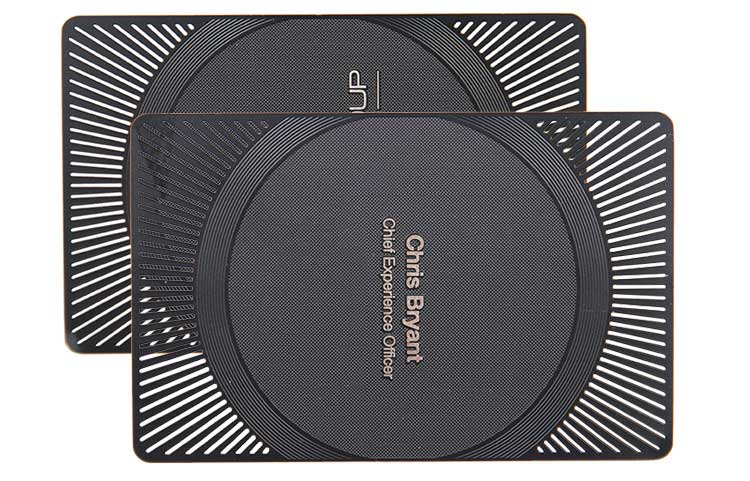
Including screen printing three colors (or multi-color), also can do full color metal card.
Lace
Can be selected from the companys lace library, or can be designed at will.
Backing
Can only be selected from the companys base pattern library (or by sample card) or made by the customers own design and open mold.
Code
It can be divided into printing code (also called flat code), etching convex code, etching concave code, playing concave and convex code.
Previous:Card printing pre-treatment technology requirements
IC card is divided into contact IC card and non-contact IC card, contact IC card belongs to a kind of IC card, the chip inlaid in the surface of the card, exposed visible, the communication method usi
The Visible Card not only integrates smart card applications, but also has a smart card management s
Update time:2023-04-25 09:27:14 / Views:156 With the development of society, silicone wristbands industry has achieved very good results, silicone wristbands home, daily necessities
Update time:2023-04-25 10:10:49 / Views:92 Digital silver visual card as a new electronic silver payment card, while retaining the security of payment functions, adding more persona
IC card is also known as smart card, wisdom card, integrated circuit card. The rapid development of
It is understood that the issuance of financial ic cards has reached a very impressive number since the beginning of 2012, and major banks also replace the original magnetic stripe bank cards, but due