Welcome To CardCube Group ! The Largest Manufacturer Of RFID Custom Products

File format.
cdr, ai, eps, pdf and other vector graphics
Size
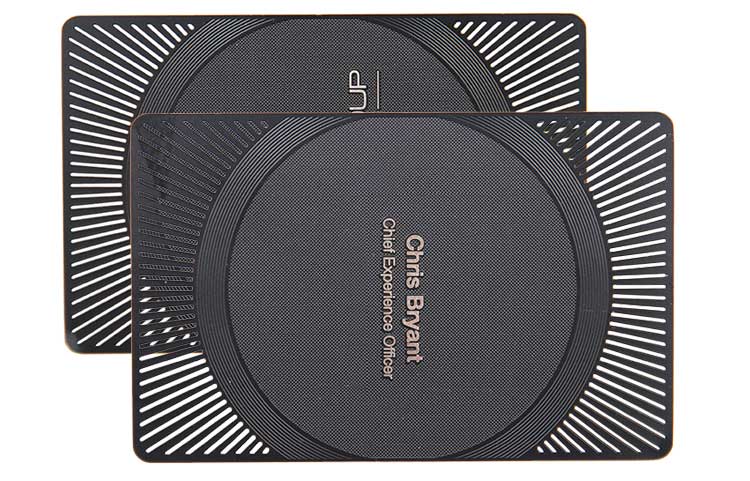
there are three common sizes, 85mm×54mm, 80mm×50mm, 76mm×44mm, we can also make other shapes and sizes of shaped cards according to customers requirements.
Thickness
Commonly used thickness is 0.35mm, also can do 0.25mm, 0.30mm, 0.40mm, 0.50mm, 0.80mm0.1cm and other thickness.
Color
Including screen printing three colors (or multi-color), also can do full color metal card.
Lace
Can be selected from the companys lace library, or can be designed at will.
Backing
Can only be selected from the companys base pattern library (or by sample card) or made by the customers own design and open mold.
Code
It can be divided into printing code (also called flat code), etching convex code, etching concave code, playing concave and convex code.
Previous:Card printing pre-treatment technology requirements
CPU card international standard International standard of CPU card and its application standard in financial field International Organization for Standardization Since 1987, the
CPU cards are the highest-end smart cards available, and can be considered the smart card of smart cards, and there are many models, of which the Philips CPU card is one. The system upgrade allows ope
Update time:2023-04-25 10:29:59 / Views:85 ⒈ chip card introduction: Chip card production knowledge a text to read! Chip card, also known as PVC card, refers t
Update time:2023-03-27 10:56:43 / Views:174 Smart cards are one of the newest additions to the field of information technology. Similar in size to todays plastic payment cards, smar
M1 card, also known as NXPMifareone, is an inductive IC card produced by Philips, commonly used card chip S50 and S70 two models. M1 card is currently the most widely used chip, has been successfully
Update time:2023-04-25 10:20:43 / Views:129 Some people will ask the hairdresser keychain card is not an ordinary keychain card, when presented can be discounted has been while. In