Welcome To CardCube Group ! The Largest Manufacturer Of RFID Custom Products

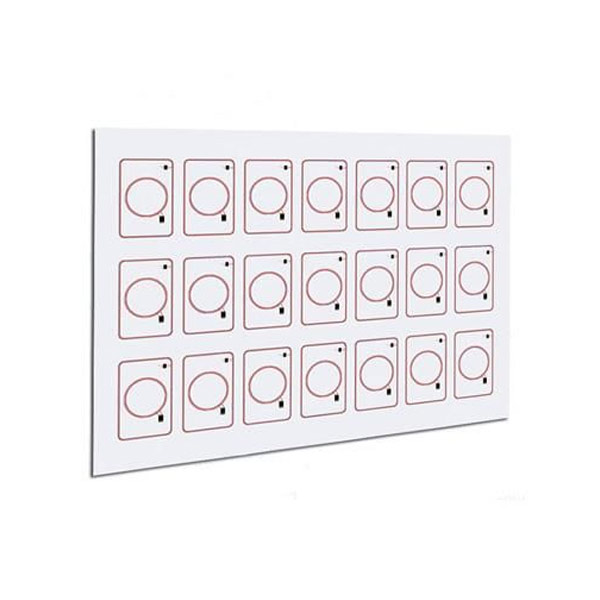
ID card is divided into ID thin card and ID thick card, ID thin card is usually PVC plus coil, currently in the attempt to etched antenna, our factory for 5 layers of PVC lamination, thickness 0.8mm, after printing 0.9. induction distance is determined by the chip and machine, chip model: MF1 S20 S50 S70 domestic ST-LRI2K I-code, etc. sealing is better. It is recommended to use PET high temperature resistant material when using the card in the parking lot to prevent customers from putting the card at the head of the car to deformation by exposure to the sun.

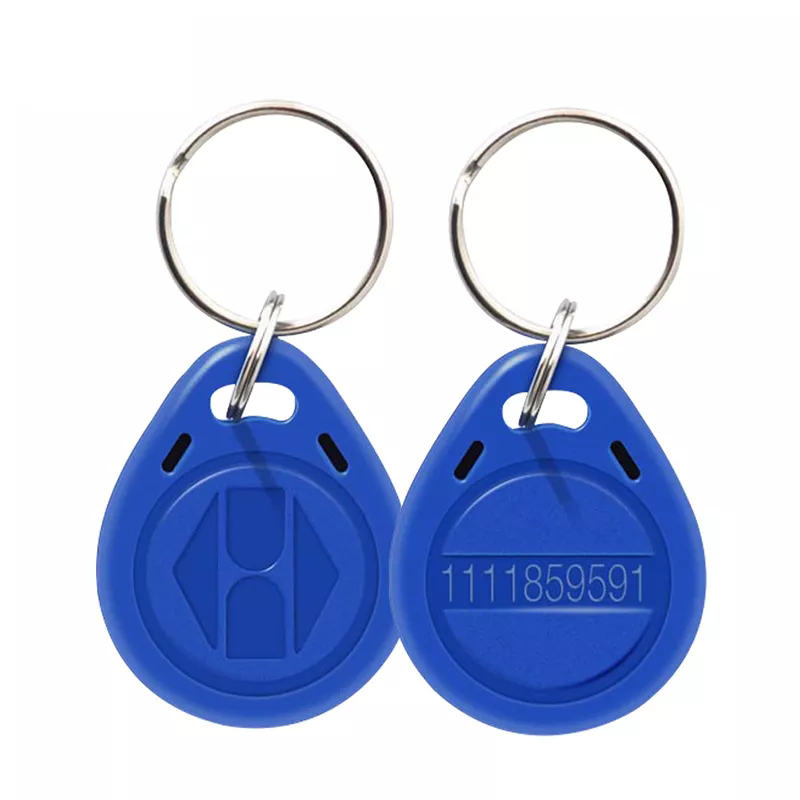
ID thick card PVC and ABS material plus coil bonding, the front side of the PVC can be offset printing, the reverse side of the ABS material can only be screen printed. Thickness 1.8mm, can be encapsulated IDICUHF, etc., generally encapsulated ID chip-TK41, T5567, etc., induction distance by the chip and card reading machine to decide, TK4100 reading distance in 2-10CM, EM4100 in 20-100CM. can be arbitrarily selected location punching, the production process of punching position will avoid the chip position. Disadvantages: PVC good ABS adhesive sealing, water resistance is not good.
ID card and IC card is not the same, although ID card can be directly induction, but it is the same as the magnetic stripe card, only the card number, and does not have any confidentiality function, so the market of consumer systems generally use IC card, the current magnetic stripe card has been slowly launched from the financial industry, IC card gradually into the financial market.
(1) the card reader sends the carrier signal outward via the antenna.
(2) ID card into the readers work area, by the ID card inductor coil and capacitor resonant circuit to receive the carrier wave signal emitted by the card reader, ID card chip in the radio frequency interface module of the signal generated by the power supply voltage, reset signal and system clock, so that the chip "activation"; (3) ID card chip reading control control.
(3) ID card chip reading control module will be modulated in the memory data by the phase coding on the carrier wave, through the ID card antenna back to the card reader;.
(4) the card reader to receive the ID card back to the signal demodulation, decoding and sent to the background computer; (5) the background computer according to the ID card back to the signal.
(5) the background computer according to the ID card number of the legality, for different applications to make the corresponding processing and control.
At present, because the ID card is easy to manage, the price is low, so the enterprise attendance card, parking card, access card, a card, etc. are using the principle of ID card production, so ID card also has a very large market.
Previous:The difference between ID access card and IC card access card
In the production process of mixed woven wristbands, silicone rubber material auxiliary materials and curing agent and silica silica synthesis, and this type of woven wristbands auxiliary materials is
With the continuous development of society, the urban environment is becoming more and more complex, and more and more people, logistics and information flow always challenge the management ability of
City a cartoon represents a convenient payment tool for bus, underground, public bicycle, gasoline c
Update time:2023-03-27 10:04:27 / Views:138 Contactless PVC card S70 chip card production. S70 chip card using Philips (NXP) original Mifare PVC S70 chip, in line with IEC/ISO 14443
Membership card production. Membership cards can be made of PVC, PET, metal materials, PC and other materials, at present most domestic use PVC to make membership cards. PVC memb
The country vigorously promotes the intelligent IC At present, banks will not continue to issue magnetic stripe cards. There are many reasons. The main reason is security. Why the magnetic stripe card