Welcome To CardCube Group ! The Largest Manufacturer Of RFID Custom Products

Warehouse operations are under increasing pressure to deliver higher accuracy, faster processing speeds, and real-time visibility across inventory flows. Traditional systems based on manual processes or barcode scanning are no longer sufficient in high-volume, high-velocity environments. As a result, RFID warehouse management has emerged as a practical and scalable solution for modern logistics operations.
rfid (Radio Frequency Identification) enables automatic identification and tracking of items using radio waves. In a warehouse environment, rfid tags attached to products, cartons, or pallets communicate with readers installed at key checkpoints. This allows data to be captured without line-of-sight requirements and without manual intervention, fundamentally changing how inventory is managed.
Unlike barcode systems that rely on individual scans, rfid systems can process multiple items simultaneously. This capability is especially valuable in warehouses where efficiency and accuracy directly impact operational cost and customer satisfaction.

A warehouse rfid system typically consists of rfid tags, fixed or handheld readers, and software integrated with the warehouse management system (WMS). Tags store unique identifiers and, in some cases, additional data such as batch numbers or product specifications. Readers emit radio frequency signals that activate the tags and retrieve stored information, which is then transmitted to backend systems for processing.
In practical deployment, fixed rfid readers are installed at strategic locations such as receiving docks, storage zones, and shipping gates. As goods move through these points, data is automatically captured and updated in the system. Handheld readers are used for exception handling, cycle counting, or areas where fixed infrastructure is not feasible.
The real value of rfid for inventory management lies in its ability to provide continuous, real-time data without interrupting operations. Inventory movements are recorded automatically, eliminating the need for manual input and significantly reducing the risk of human error.
To understand the impact of rfid warehouse management, it is important to examine the inefficiencies of conventional systems. Manual inventory processes are inherently slow and error-prone, particularly in large-scale operations. Even with barcode systems, the requirement for line-of-sight scanning introduces inefficiencies, as each item must be individually scanned.
In high-throughput warehouses, this results in delays during receiving, picking, and shipping. Inventory records are often updated in batches rather than in real time, leading to discrepancies between system data and physical stock. These inaccuracies can cause stockouts, overstocking, and order fulfillment errors, all of which carry significant financial implications.
Additionally, barcode labels are susceptible to damage from handling, environmental exposure, or wear, further increasing the likelihood of scanning errors. As operations scale, these limitations become more pronounced, making it difficult to maintain efficiency and accuracy.
The adoption of rfid for inventory and warehouse management delivers measurable improvements across multiple operational areas. One of the most immediate benefits is real-time visibility. Because rfid systems continuously capture data as items move, warehouse managers can monitor stock levels and locations at any given moment. This level of visibility enables faster decision-making and more responsive inventory control.
Inventory accuracy is another critical advantage. rfid systems significantly reduce reliance on manual processes, which are the primary source of errors in traditional systems. By automating data capture, rfid can achieve accuracy rates exceeding 99%, even in complex warehouse environments. This improvement has a direct impact on order fulfillment, reducing the frequency of mispicks and shipping errors.
Efficiency gains are particularly evident in receiving and shipping operations. With rfid, incoming goods can be scanned automatically as they pass through dock doors equipped with readers. Entire pallets or cartons can be processed in seconds, eliminating the need for manual counting and verification. Similarly, outbound shipments can be validated automatically, ensuring that the correct items and quantities are dispatched.
Labor optimization is another important factor. Warehouse operations often involve repetitive tasks such as scanning, counting, and data entry. rfid reduces the need for these activities, allowing staff to focus on higher-value tasks. This not only lowers labor costs but also improves overall productivity.
Beyond inventory tracking, rfid systems can also be used to monitor warehouse assets such as containers, equipment, and handling units. This reduces time spent searching for misplaced assets and improves utilization rates. In large facilities, where asset visibility is often limited, this can lead to significant operational improvements.
rfid technology can be integrated into nearly every stage of warehouse operations, creating a seamless flow of information from receiving to shipping.
During receiving, rfid enables automatic identification of incoming goods. As shipments arrive, tags are read instantly, and data is matched against purchase orders in the system. This reduces processing time and ensures that discrepancies are identified immediately.
In storage and put-away operations, rfid supports optimized placement of goods by providing accurate location tracking. Items can be assigned to storage locations based on demand patterns, improving retrieval efficiency.
Picking and packing processes also benefit from rfid integration. Workers can use handheld readers to locate items quickly, while fixed systems can verify order accuracy during packing. This reduces picking errors and ensures that shipments meet customer requirements.
Shipping operations are streamlined through automated verification at dispatch points. rfid readers confirm that the correct items are loaded onto outbound vehicles, reducing the risk of incorrect shipments. At the same time, the system updates inventory records in real time, maintaining data accuracy.
Cycle counting, which is traditionally a disruptive process, can be performed continuously using rfid. Instead of shutting down operations for manual counts, warehouses can conduct ongoing inventory checks without interrupting workflows. This ensures that inventory records remain accurate at all times.
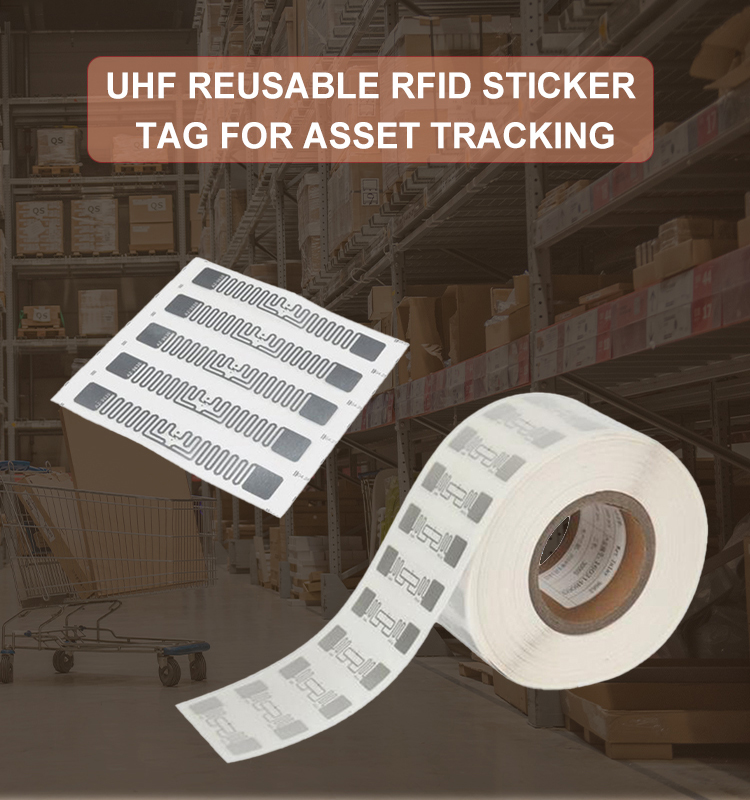
While barcode systems remain widely used due to their low cost and simplicity, they lack the capabilities required for modern warehouse operations. The most significant limitation is the need for line-of-sight scanning, which slows down processes and increases labor requirements.
rfid eliminates this constraint by enabling automatic, bulk scanning. Multiple items can be read simultaneously, even if they are not directly visible. This dramatically increases processing speed, particularly in high-volume environments.
In terms of data capacity, rfid tags can store more information than barcodes, allowing for more detailed tracking. They are also more durable, as they are less affected by environmental conditions such as moisture, dirt, or physical wear.
However, rfid systems involve higher initial investment, including hardware, tags, and integration costs. For many businesses, the decision to adopt rfid depends on balancing these costs against the long-term benefits of improved efficiency and accuracy.
Despite its advantages, implementing a warehouse rfid system requires careful planning. One of the primary challenges is the initial investment, which includes not only hardware but also system integration and process redesign. Businesses must evaluate the return on investment based on factors such as labor savings, error reduction, and operational efficiency.
Environmental factors can also affect rfid performance. Materials such as metal and liquids can interfere with radio signals, reducing read accuracy. Selecting the appropriate tag type and optimizing system design are essential to overcoming these challenges.
Integration with existing systems is another critical consideration. rfid solutions must work seamlessly with warehouse management and enterprise systems to ensure data consistency. This often requires customization and technical expertise.
Finally, successful implementation depends on effective change management. Employees must be trained to use new systems and adapt to updated workflows. Without proper training and support, the benefits of rfid may not be fully realized.
To achieve optimal results, businesses should adopt a structured approach to rfid implementation. Conducting a pilot project is a practical first step, allowing organizations to test the system in a controlled environment and identify potential issues before full-scale deployment.
Tag selection is a key factor in system performance. Different applications require different types of tags, depending on factors such as reading distance, environmental conditions, and material compatibility. Choosing the right tag ensures reliable operation and long-term durability.
Reader placement should be carefully planned to maximize coverage and minimize blind spots. Strategic positioning at key checkpoints ensures that all relevant data is captured without redundancy or interference.
System integration should be designed to align with existing workflows rather than disrupt them. This includes ensuring compatibility with WMS and other enterprise systems, as well as optimizing data flow for efficiency.
rfid warehouse management is not just a technological upgrade; it represents a shift toward data-driven operations. By providing real-time visibility and automation, rfid enables warehouses to operate with greater precision and efficiency.
As supply chains become more complex and customer expectations continue to rise, the ability to track and manage inventory accurately becomes a competitive advantage. rfid systems provide the foundation for this capability, supporting advanced analytics, automation, and integration with emerging technologies such as IoT and AI.
For businesses handling large volumes of goods or operating in industries where accuracy is critical, rfid is increasingly becoming a standard rather than an option. While implementation requires investment and planning, the long-term benefits in terms of efficiency, accuracy, and scalability make rfid a compelling solution for modern warehouse management.
rfid for inventory and warehouse management offers a practical solution to many of the challenges faced by traditional systems. By automating data capture, improving accuracy, and enabling real-time visibility, rfid systems help warehouses operate more efficiently and respond more effectively to changing demands.The transition from manual or barcode-based systems to rfid requires careful consideration, but the operational improvements it delivers can be substantial. As technology continues to evolve, rfid will play an increasingly important role in shaping the future of warehouse management.
If you are evaluating rfid warehouse management solutions, selecting the right technology and implementation strategy is critical. From tag selection to system integration, every detail impacts performance.
We provide customized rfid solutions for warehouse environments, including high-performance rfid tags, system design support, and bulk supply capabilities.
Contact us to discuss how an optimized warehouse rfid system can improve your inventory accuracy and operational efficiency.
As smart theme parks, resorts, and large-scale venues increasingly demand efficient management and seamless guest experiences, RFID wearables have become an industry standard. The newly launched G13 M
The retail industry thrives on creating seamless, engaging, and efficient customer experiences, especially during high-stakes events like Black Friday. As one of the busiest shopping days of the year,
In today's ever-changing technology, identification technology is always in the process of continuous innovation and development. From the traditional paper documents to electronic identification card
From June 18 to 20, 2025, the IOTE 2025 International Internet of Things Exhibition (Shanghai Station) was successfully held at the Shanghai New International Expo Center. Card Cube Group made a brill
The hospitality industry has entered a new era of digital transformation, where enhancing the guest experience is no longer a luxury—it's a necessity. With rising customer expectations, increased comp
Event wristbands are wearable identification tools used to manage access, enhance security, and promote branding at concerts, conferences, festivals, and private gatherings. Available in both single-u