Welcome To CardCube Group ! The Largest Manufacturer Of RFID Custom Products

Contactless smart card is also called radio frequency card, is currently just research a smart card products, it and contact smart card has a big difference, contactless smart card only need to read the information directly between the card reader, not only convenient and fast, and relatively safe, the current community access card, parking card, gas card, etc. are using the original radio frequency card to produce, life we all have ID card also belongs to the radio frequency card series.
In the past 15 to 20 years, low-frequency induction cards are the standard product of the security industry. these cards are simple in function and allow anyone holding the card to pass through the access control. In other words, anyone, and through whatever channel - even if stolen from the rightful card owner - who had the card could enter a facility guarded by an access control system, whether that was an office, a manufacturing plant or a bank.
In this case, cards with the addition of visual security identifiers such as photographs were created to provide a basic means of identity verification. For example, financial institutions require employees to carry ID access cards with their photos on them so that security personnel can verify their identities at all times. However, these photo ID cards/access cards are currently challenged by card duplication technology. Rogue criminals can create duplicate cards with certain devices to get past identity verification and through access control. Unless equipped with security cameras or witnessed by an employee, there is no way to know that an unauthorized person has ever passed through the access control.
Because of this problem, high-frequency cards have become ideal for access control. High-frequency cards, commonly referred to as contactless smart cards. these cards have multiple layers of secure elements embedded in the chip that provide a higher level of security than traditional ID cards. Contactless smart cards employ multi-variable keys and mutual authentication to prevent unauthorized persons from using the card and reader; and encrypt the data stored on the card to further enhance the protection of the information on the card. In addition, some vendors are able to offer proprietary card formats (including monitorable card numbers) for large organizations to increase security.
Advances in technology are not limited to the inside of the card. New visual technologies, such as optical variable ink (OVI) and holograms, have emerged as technological tools used by governments for credential cards and even currency security.
In terms of applications, high-security cards have been designated by the U.S. Transportation Security Administration for pilots due to their tight security features, and have become standard for high-security locations.
From the price factor, the price of high-security cards is now comparable to the price of low-frequency solutions, which can be said to be a boon for those organizations interested in upgrading their access control systems.
In addition, in order to smoothly transition to high-security configurations, many modern readers support multiple types of technology, including older proximity cards, magnetic stripe cards, high-frequency cards, and radio frequency identification cards. This means that users can achieve a phased transition to high-frequency access control systems by equipping new readers, gradually replacing ID cards as needed.
Contactless access control cards can combine physical and logical access control in one card, so that users do not need to have two separate cards, and no additional equipment (such as RSA dynamic password device), in a single card to achieve full functionality.

Frosted card and ordinary card production materials are basically the same, are PVC material or PET
The country vigorously promotes the intelligent IC At present, banks will not continue to issue magnetic stripe cards. There are many reasons. The main reason is security. Why the magnetic stripe card
Update time:2023-03-27 10:46:51 / Views:164 At present, in many cities have issued a travel card "one card", not only allows citizens to visit the citys tourist attractions, but als
In recent years, with the continuous updating and development of intelligent ic card, smart card fro
Placemats have anti-scalding, non-slip role, can be a good protection of the restaurant table, followed by placemats color and shape, also be used to decorate the table, coffee table, etc., embellish
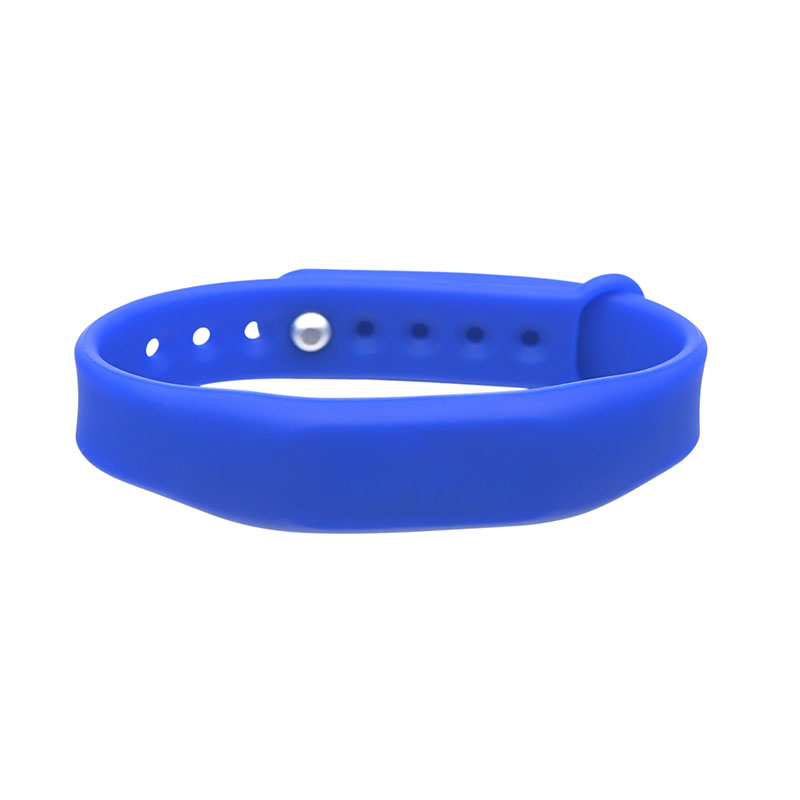
Update time:2023-04-03 16:09:46 / Views:150 The characteristics of injection molding id silicone wristbands process. Injection molding id silicone wristbands are elastome