Welcome To CardCube Group ! The Largest Manufacturer Of RFID Custom Products

In today’s connected world, Near Field Communication (NFC) has become a foundational technology enabling seamless interaction between the physical and digital realms. Operating through electromagnetic induction at short distances—typically less than 10 centimeters—NFC allows devices to communicate effortlessly without the need for pairing or visual contact. This simple “tap-and-go” capability has revolutionized industries such as retail, healthcare, logistics, and transportation, powering applications from contactless payments and secure access control to smart packaging and IoT automation.
At the heart of these innovations lie NFC tags—compact, passive chips capable of storing data and communicating with NFC-enabled devices like smartphones or readers. The NFC Forum, a consortium including NXP Semiconductors, Sony, and Qualcomm, standardizes these tags to ensure global interoperability. According to the Forum’s specifications, NFC Tags are divided into five main categories (Type 1–5), each optimized for distinct use cases in terms of memory capacity, speed, security, and range. Types 1–4 adhere to the ISO/IEC 14443 proximity card standard (up to 10 cm range), while Type 5 is based on ISO/IEC 15693, extending communication to around one meter.
Choosing the correct NFC Tag type is critical. An inappropriate choice can lead to poor user experience—slow reading speeds, security vulnerabilities, or unnecessary costs. Conversely, matching the right tag to your project ensures efficiency, scalability, and superior performance. This guide breaks down each NFC Tag type, compares their specifications across five core dimensions, and concludes with a selection roadmap to help you make informed, application-specific decisions.
Type 1 tags are the entry-level members of the NFC family, prized for their simplicity and affordability. Built on the ISO/IEC 14443A protocol, these tags use Manchester coding to achieve reliable communication even in less-than-ideal RF conditions. Early pioneers such as Topaz set the groundwork for these versatile, low-cost chips.
Memory typically ranges from 96 bytes to 2 KB, enough for basic data like URLs or short IDs. They feature read/write capability and can endure over 100,000 write cycles, with a 10-year retention time. Their basic anti-collision mechanism supports multiple tags in one field, though read speeds—around 106 kbps—are modest.
The main advantage of Type 1 is cost: they can be produced for under $0.10 per tag, ideal for disposable or large-scale projects. However, security is minimal, limited to static lock bits without encryption.
Common uses: event wristbands, smart posters, disposable coupons, and marketing campaigns. For example, Coca-Cola’s “Tap the Bottle” campaign used millions of NFC caps to drive mobile engagement. While limited in speed and memory, Type 1 remains a staple for cost-sensitive, high-volume rollouts.
Type 2 tags, also based on ISO/IEC 14443A, strike a balance between cost, capability, and compatibility. Using Miller coding and supporting data rates up to 212 kbps, they’re roughly twice as fast as Type 1. The NXP NTAG and MIFARE Ultralight families are popular examples, offering from 48 bytes to 888 bytes of memory, with larger variants reaching up to 2 KB.
These tags natively support NDEF (NFC Data Exchange Format), ensuring broad compatibility with nearly all modern smartphones. They also feature password protection, lock bits, and unique identifiers (UIDs) that prevent cloning—important in retail and authentication use cases.
Costing around $0.05–$0.20, Type 2 tags dominate the consumer NFC space. They’re used in loyalty programs (e.g., Starbucks Key fobs), anti-counterfeiting systems (Louis Vuitton bags), and interactive packaging that redirects users to apps or websites.
While not as secure as Type 4, Type 2 tags offer a sweet spot of performance, reliability, and price, making them ideal for everyday consumer touchpoints.
Type 3 tags are powered by Sony’s FeliCa technology, defined by ISO/IEC 18092, and renowned for their speed and capacity. These tags can reach 424 kbps data rates and support up to 1 MB of memory, far exceeding other types. They employ block-based addressing and advanced anti-collision mechanisms, allowing fast, simultaneous reads in busy environments.
Type 3 tags are rewritable, highly durable (over 1 million write cycles), and secure, featuring DES or 3DES encryption with mutual authentication. They’re particularly popular in Asia, where FeliCa cards power massive transit and payment systems like Suica (Japan) and Octopus (Hong Kong), handling millions of daily transactions with sub-second response times.
Their downsides include higher costs (around $0.50+) and limited compatibility with Western devices, but in high-throughput environments—such as public transport, corporate credentials, and e-wallet systems—Type 3 delivers unmatched speed and reliability.
Type 4 tags represent the most advanced class within the NFC Forum lineup, compliant with both ISO/IEC 14443A and 14443B standards. They support data rates up to 848 kbps, memory capacities up to 32 KB or more, and sophisticated file systems that resemble smart cards.
These tags operate through APDU (Application Protocol Data Unit) commands defined by ISO 7816-4, bridging NFC with existing smart card infrastructures like access control or banking. They’re used in secure access systems, digital IDs, and contactless payment cards.
Security is top-tier: AES-128/256, ECC, and secure messaging protocols ensure strong cryptographic protection. Some models, such as NXP’s DESFire EV3 or NTAG 424 DNA, offer transaction counters, tamper detection, and audit logging.
While more expensive ($1+ per unit), their longevity (500,000 write cycles, 25-year retention) and enterprise-grade encryption justify the investment for high-security environments like corporate facilities, e-passports, and healthcare records.
Type 5 tags, based on ISO/IEC 15693, extend NFC’s reach beyond proximity to vicinity-level operation, achieving read ranges of up to 1.5 meters. Although data rates (6.62–26.48 kbps) are lower, the increased range makes them ideal for industrial applications.
These tags often include I²C interfaces, allowing microcontrollers to update data dynamically—bridging NFC with IoT systems. Models like STMicroelectronics’ M24SR offer 2–8 KB memory, 100,000 write cycles, and strong anti-cloning UIDs.
Use cases include warehouse inventory management, supply chain tracking, asset maintenance logs, and smart agriculture. For example, DHL employs Type 5 tags on pallets to enable batch scanning without line-of-sight access.
While smartphone support is limited, Type 5 tags excel in rugged or large-scale environments, combining durability, affordability ($0.10–$0.50), and long-distance functionality.
| Feature | Type 1 | Type 2 | Type 3 | Type 4 | Type 5 |
|---|---|---|---|---|---|
| Standard | ISO/IEC 14443A | ISO/IEC 14443A | ISO/IEC 18092 (FeliCa) | ISO/IEC 14443A/B + 7816-4 | ISO/IEC 15693 |
| Read Range | 4–10 cm | 4–10 cm | 4–10 cm | 4–10 cm | Up to 1.5 m |
| Memory | 96 B–2 KB | 48 B–2 KB | Up to 1 MB | Up to 32 KB | 2–8 KB |
| Speed | 106 kbps | 106–212 kbps | 212–424 kbps | 106–848 kbps | 6.6–26 kbps |
| Write Cycles | 100,000 | 10,000+ | 1,000,000 | 500,000 | 100,000 |
| Security | Basic lock bits | Password protection | DES/3DES | AES/ECC/Secure Messaging | Unique ID |
| Typical Cost | <$0.10 | $0.05–$0.20 | ~$0.50+ | ~$1.00+ | $0.10–$0.50 |
Summary:
Best for low cost: Type 1
Best for universal use: Type 2
Best for high-speed data: Type 3
Best for security: Type 4
Best for long range/IoT: Type 5
Selecting the right NFC Tag depends on five Key factors—range, memory, security, reusability, and cost:
Range: For close interactions (e.g., phone taps), Types 1–4 are ideal; for distance-based tracking, Type 5 is essential.
Memory Needs: URLs fit Type 1; product data fits Type 2 or 5; multimedia or certificates demand Type 3 or 4.
Security: Public campaigns can use Type 1/2; sensitive data requires Type 4’s encryption.
Reusability: For one-time use, pick Type 1; for updatable systems, go with Type 2 or 4.
Budget: Pilot projects can start with Type 1/2, upgrading later to 4/5 as scale grows.
Examples:
Museums → Type 2 (interactive exhibits)
Pharmaceutical logistics → Type 4 (anti-tampering)
Industrial IoT → Type 5 (remote monitoring)
Each NFC Tag type is engineered for a specific purpose—Type 1 for simplicity, Type 2 for versatility, Type 3 for speed, Type 4 for security, and Type 5 for distance. Understanding these distinctions transforms NFC from a convenience tool into a strategic enabler of smart, connected ecosystems. As NFC converges with AI, IoT, and 6G, tags will evolve beyond identifiers into intelligent nodes capable of sensing, learning, and adapting—turning every “tap” into an opportunity for innovation.
Update time:2023-04-25 10:16:25 / Views:118 Bus drip rubber card can use mobile NFC cell phone to swipe the card, at present, maybe not every city can realize. Now Jiuquan bus drip
Near Field Communication (NFC) technology has evolved from a niche convenience feature into a widely adopted solution across payment systems, access control, public transportation, retail loyalty prog
In the heart of the festive season—when dazzling lights, joyful music, and the rush of holiday shopping dominate the air—efficiency becomes an unspoken necessity. Among the many innovations streamlini
As the global events industry evolves, RFID wristbands have emerged as a powerful tool to elevate operational efficiency and enhance attendee engagement. These smart wristbands utilize radio frequency
This article explores the differences between FeliCa and MIFARE Classic NFC technologies, comparing speed, security, cost, and application scenarios. FeliCa is favored for secure, high-speed payments
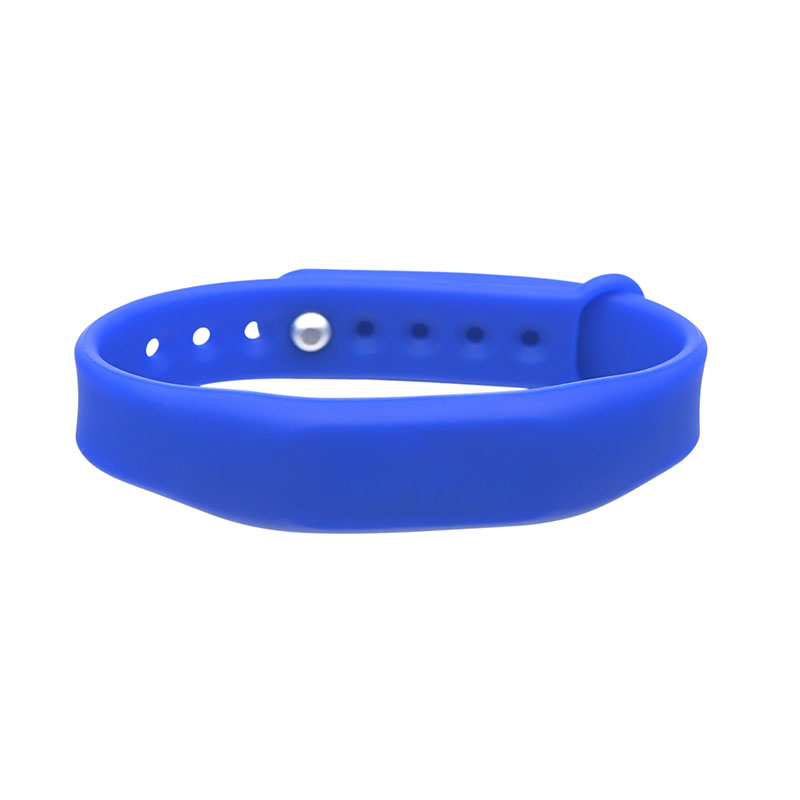
RFID Colorful Silicone Wristbands are widely used on Campuses, Amusement Parks, Buses, Access Control Areas, Concerts etc.