Welcome To CardCube Group ! The Largest Manufacturer Of RFID Custom Products

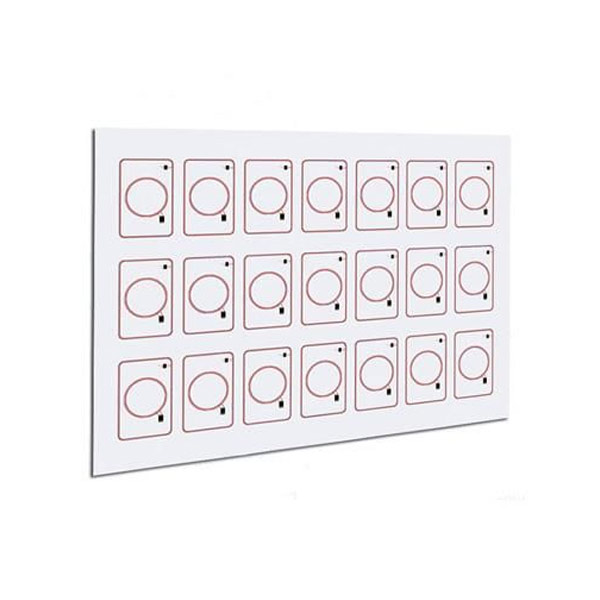
Contactless IC card is also called RFID card and laminated board with chip and antenna. It communicates with electromagnetic induction theory and reading device, and there is no contact point on the card surface. Compared with contact IC cards, induction cards are highly reliable and easy to operate. Even if the chip on the surface of the card is not visible, better printed cards can be read in different directions.

Contactless IC card is the advanced technology of existing international ID card industry. We can classify the logical security cards and CPU cards according to different internal integrated circuits. It is mainly used for resident ID card, land card, bus card, access card, membership card, etc.
Contactless IC card has high reliability and direct contact with the device to avoid any failure of dust or clogged card. Contactless IC cards have fast anti-collision function to prevent data interference and enable the reader to read more cards at the same time. their memory structure can be used in different systems. One can set different passwords or access conditions for different applications. High encryption and mutual authentication verification with operating passwords and access conditions for each part.
Previous:ID card according to its composition structure classification
Recently, CCTV news channel (CCTV-13) broadcasted the news of "Sichuan Luzhou launched the no-fill sheet convenient tax measures". The reporter went deep into Naxi District to conduct an in-depth inte
In recent years, businesses have been increasingly looking for sustainable, eco-friendly alternatives to traditional materials — and RFID cards are no exception. While plastic cards have long been the
Update time:2023-04-03 16:08:48 / Views:121 The varieties of common campus cards and the corresponding production methods. When making campus cards, everyone doesnt know
ID card that is THRC1213 read type contactless ID it through the reader induction power supply and read the card stored in the chip EEPROM only the card number, the card number is written once before
In industries where identity verification, access control, and real-time tracking are crucial, wristbands serve as more than just identification tags—they are tools for safety, efficiency, and data co
PVC (polyvinyl chloride) granular rubber material is a multi-component plastic, because the content of each component is different, the appearance varies greatly. There are transparent materials and o